Cool new tech
2019 · 230m
Synopsis
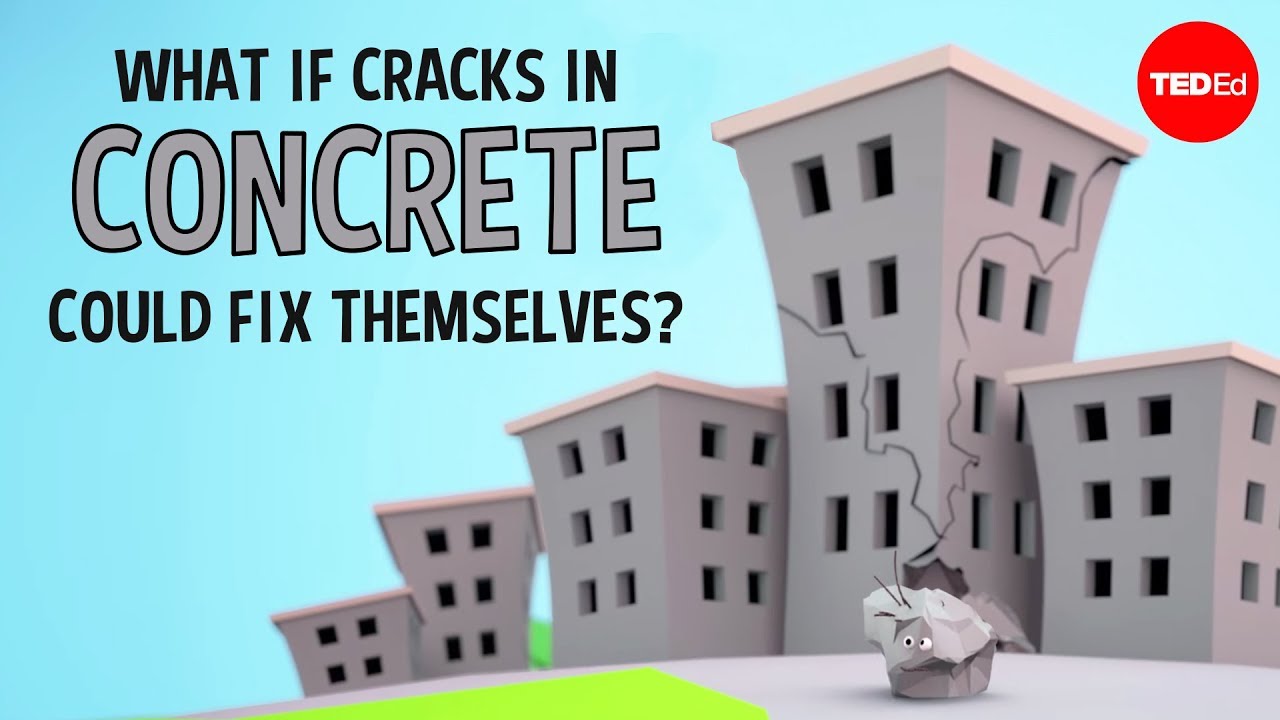
Check out our Patreon page: View full lesson: Concrete is the most widely used construction material in the world. It can be found in swathes of city pavements, bridges that span vast rivers and the tallest skyscrapers on earth. But it does have a weakness: it’s prone to catastrophic cracking that has immense financial and environmental impact. What if we could avoid that problem? Congrui Jin explores how to create a more resilient concrete. Lesson by Congrui Jin, directed by Aeon Production. Thank you so much to our patrons for your support! Without you this video would not be possible! Emma Moyse, Fahad Nasser Chowdhury, Marin Kovachev, Roman Pinchuk, Daniel Huerga, Maria Lerchbaumer, Edgar Campos Barrachina, Dianne Palomar, The Brock, Curtis Light, Ernest Chow, Liana Switzer, Maija Chapman, Pamela Harrison, Mighterbump , Beatriz Inácio, Robert Hargis, Mircea Sîrbu, Irindany Sandoval, William Bravante, Elizabeth Parker, Sai Krishna Koyoda, Samuel Barbas, Maxwell Ingram, Victoria Soler-Roig, Abdulmateen Aderinto, Pavel Maksimov, Barbara Younker, Cyrus Garay, Yvette Mocete, Mike Azarkman, Patricia Alves Panagides, William Biersdorf, Michael Aquilina, Vinamr , FireWolfLasers, Kshitij Shah, Mohammad Said, Teach Me Diné - Navajo Language, Victoria Veretilo, Rebecca Reineke, Kyanta Yap, Brandon Thomas, Lewis Westbury, Ojas Kapoor, Mirzat Turap, Jaime Arriola, Emilia Alvarado, Javid Gozalov and Philipp Hiestand.
You Might Also Like
Kids Songs by CoComelon
Learn English With Disney Movies
CoComelon
Alphabet (ABC) Songs by CoComelon
Hidden Figures: Black History
Let's talk about sex
SS 3 Chemistry
SS 2 Physics
ABC Songs for Kids - CoComelon Nursery Rhymes
Baby Learning with CoComelon - Colors, Shapes and Numbers!
Learn Colors with CoComelon!
JJ & Friends by CoComelon
Comments
10 Comments
What could our future look like if we harness our technology to create a sustainable world? Take a look at the possibilities. -- Faced with the realities of current crises, it’s easy to assume our world is headed in a bleak direction. But there’s good reason to be hopeful— with developments in science and technology, a positive future is more viable than ever before. So, what if the future was awesome? Iseult Gillespie explores what three cities could look like in 100 years if we harness the tools we have at our disposal. Lesson by Iseult Gillespie, directed by Devin Clark, Augenblick Studios. This video made possible in collaboration with Speed & Scale Learn more about how TED-Ed partnerships work: Support Our Non-Profit Mission ---------------------------------------------- Support us on Patreon: Check out our merch: ---------------------------------------------- Connect With Us ---------------------------------------------- Sign up for our newsletter: Follow us on Facebook: Find us
What could our future look like if we harness our technology to create a sustainable world? Take a look at the possibilities. -- Faced with the realities of current crises, it’s easy to assume our world is headed in a bleak direction. But there’s good reason to be hopeful— with developments in science and technology, a positive future is more viable than ever before. So, what if the future was awesome? Iseult Gillespie explores what three cities could look like in 100 years if we harness the tools we have at our disposal. Lesson by Iseult Gillespie, directed by Devin Clark, Augenblick Studios. This video made possible in collaboration with Speed & Scale Learn more about how TED-Ed partnerships work: Support Our Non-Profit Mission ---------------------------------------------- Support us on Patreon: Check out our merch: ---------------------------------------------- Connect With Us ---------------------------------------------- Sign up for our newsletter: Follow us on Facebook: Find us
Dig into the science of enhanced rock weathering, a technology which takes carbon dioxide out of the air and stores it in rocks. -- Mount Teide is one of the world’s largest active volcanoes, and there may be a way to use the basalt rock inside it to save humanity. Obviously, destroying an ancient volcano would cause catastrophic and unpredictable ecological fallout. But what if we harvested only some of that basalt— could it really stop climate change? Elise Cutts explores the fascinating science of enhanced rock weathering. Lesson by Elise Cutts, directed by Ivana Volda. This video made possible in collaboration with Speed & Scale Learn more about how TED-Ed partnerships work: Support Our Non-Profit Mission ---------------------------------------------- Support us on Patreon: Check out our merch: ---------------------------------------------- Connect With Us ---------------------------------------------- Sign up for our newsletter: Follow us on Facebook: Find us on Twitter: Peep us o
Dig into the science of enhanced rock weathering, a technology which takes carbon dioxide out of the air and stores it in rocks. -- Mount Teide is one of the world’s largest active volcanoes, and there may be a way to use the basalt rock inside it to save humanity. Obviously, destroying an ancient volcano would cause catastrophic and unpredictable ecological fallout. But what if we harvested only some of that basalt— could it really stop climate change? Elise Cutts explores the fascinating science of enhanced rock weathering. Lesson by Elise Cutts, directed by Ivana Volda. This video made possible in collaboration with Speed & Scale Learn more about how TED-Ed partnerships work: Support Our Non-Profit Mission ---------------------------------------------- Support us on Patreon: Check out our merch: ---------------------------------------------- Connect With Us ---------------------------------------------- Sign up for our newsletter: Follow us on Facebook: Find us on Twitter: Peep us o
Explore how seawater desalination methods transform saltwater into potable freshwater, and what drawbacks this technology has. -- Humans have been transforming seawater into potable freshwater for millennia. Today, billions of people can’t access clean drinking water, and 87 different countries are projected to be “water-scarce” by 2050. So, how can we use seawater desalination to combat water scarcity? And can we do it without further harming the environment? Manish Kumar digs into how scientists are creating freshwater. Lesson by Manish Kumar, directed by Vitalii Nebelskyi, and action creative agency. Support Our Non-Profit Mission ---------------------------------------------- Support us on Patreon: Check out our merch: ---------------------------------------------- Connect With Us ---------------------------------------------- Sign up for our newsletter: Follow us on Facebook: Find us on Twitter: Peep us on Instagram: ---------------------------------------------- Keep Learning ---
Explore how seawater desalination methods transform saltwater into potable freshwater, and what drawbacks this technology has. -- Humans have been transforming seawater into potable freshwater for millennia. Today, billions of people can’t access clean drinking water, and 87 different countries are projected to be “water-scarce” by 2050. So, how can we use seawater desalination to combat water scarcity? And can we do it without further harming the environment? Manish Kumar digs into how scientists are creating freshwater. Lesson by Manish Kumar, directed by Vitalii Nebelskyi, and action creative agency. Support Our Non-Profit Mission ---------------------------------------------- Support us on Patreon: Check out our merch: ---------------------------------------------- Connect With Us ---------------------------------------------- Sign up for our newsletter: Follow us on Facebook: Find us on Twitter: Peep us on Instagram: ---------------------------------------------- Keep Learning ---
Dig into the science of thermal batteries, and how this technology can generate heat more efficiently than fossil fuels. -- Industrial manufacturers spend a huge amount of energy generating heat to make everyday materials and objects, like cement, steel, and paper. And since most companies use fossil fuels to reach these high temperatures, industrial heat accounts for 20% of our annual global carbon pollution. Thankfully, this is where a century-old technology comes in. Rachel Yang explores how heat batteries work. Lesson by Rachel Yang, directed by Sofia Pashaei. This video made possible in collaboration with Speed & Scale Learn more about how TED-Ed partnerships work: Support Our Non-Profit Mission ---------------------------------------------- Support us on Patreon: Check out our merch: ---------------------------------------------- Connect With Us ---------------------------------------------- Sign up for our newsletter: Follow us on Facebook: Find us on Twitter: Peep us on Instagr
Dig into the science of thermal batteries, and how this technology can generate heat more efficiently than fossil fuels. -- Industrial manufacturers spend a huge amount of energy generating heat to make everyday materials and objects, like cement, steel, and paper. And since most companies use fossil fuels to reach these high temperatures, industrial heat accounts for 20% of our annual global carbon pollution. Thankfully, this is where a century-old technology comes in. Rachel Yang explores how heat batteries work. Lesson by Rachel Yang, directed by Sofia Pashaei. This video made possible in collaboration with Speed & Scale Learn more about how TED-Ed partnerships work: Support Our Non-Profit Mission ---------------------------------------------- Support us on Patreon: Check out our merch: ---------------------------------------------- Connect With Us ---------------------------------------------- Sign up for our newsletter: Follow us on Facebook: Find us on Twitter: Peep us on Instagr
Dig into Moore’s Law and explore its 4 main limitations and how they could change how we are able to make progress in computing. -- Moore’s Law states that every 1 to 2 years the number of transistors that can fit on a given size computer chip will double. Thanks to this law, chips have gotten smaller, faster, more efficient, and cheaper. But today, there are four key problems that trip up this trend, potentially ending Moore’s Law and fundamentally changing how computing progresses. Sajan Saini and George Zaidan investigate. Lesson by Sajan Saini and George Zaidan, directed by Jeff Le Bars, JetPropulsion.space. A special thanks to Anuradha Murthy Agarwal who provided information and insights for the development of this video. Artists and artworks referenced in the animation: "The Persistence of Memory and The Disintegration of the Persistence of Memory" by Salvador Dalí "Composition VIII" by Wassily Kandinsky "Oh Jeff and Girl with Tear III" by Roy Lichtenstein "Black Square on a W
Dig into Moore’s Law and explore its 4 main limitations and how they could change how we are able to make progress in computing. -- Moore’s Law states that every 1 to 2 years the number of transistors that can fit on a given size computer chip will double. Thanks to this law, chips have gotten smaller, faster, more efficient, and cheaper. But today, there are four key problems that trip up this trend, potentially ending Moore’s Law and fundamentally changing how computing progresses. Sajan Saini and George Zaidan investigate. Lesson by Sajan Saini and George Zaidan, directed by Jeff Le Bars, JetPropulsion.space. A special thanks to Anuradha Murthy Agarwal who provided information and insights for the development of this video. Artists and artworks referenced in the animation: "The Persistence of Memory and The Disintegration of the Persistence of Memory" by Salvador Dalí "Composition VIII" by Wassily Kandinsky "Oh Jeff and Girl with Tear III" by Roy Lichtenstein "Black Square on a W